Say Goodbye To Social Skills Classes And Hello To Dungeons & Dragons
What roleplaying games like Dungeons & Dragons teach 2e kids about strengths, teamwork, and embracing the unbalanced nature of being human.
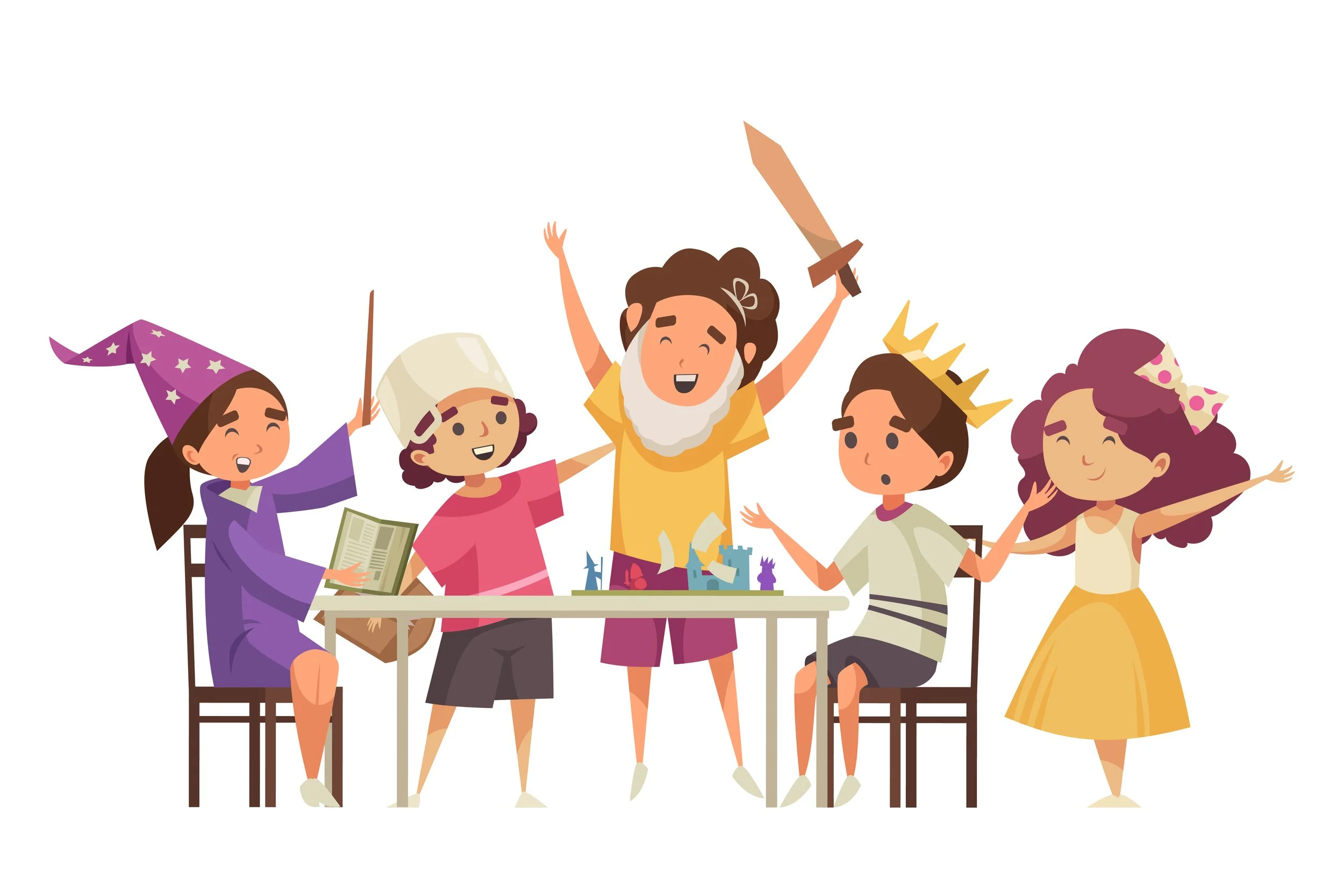
Roleplaying games (RPG) like Dungeons and Dragons (DND) have seen a resurgence in recent years. Thanks to TV shows like Stranger Things and movies like Dungeons and Dragons, most people at least have a passing familiarity with the game. But, if you don’t, let me provide a basic overview of the game (or click here to learn more about the rules). One person is the Dungeon Master (DM) and takes the players through a narrative-based, shared storyline with puzzles, battles, and quests. In general, players create a character with character stats (i.e. strength, wisdom, dexterity, etc) and work together to complete the story created by the DM. These stats give characters abilities or challenges in certain situations (does this sound familiar?).
As parents and teachers of twice-exceptional students, we can learn a lot from RPGs. Beyond the basic joy of playing a game, RPGs enforce three critical ideas for 2e students: 1) not every skill is equal, or needs to be, 2) lean into your strength, and 3) a balanced group is more powerful than a balanced individual.
Not every skill is equal or needs to be.
Usually in an RPG, players roll dice for their stats and then apply their highest numbers to areas that support their player type (i.e. a fighter needs high strength, a wizard needs high intelligence). The low scores are applied to the character’s least relevant skills for their class (i.e. there are a lot of low strength wizards around). There are lots of ways to help ensure a character is neither too strong nor too weak for the campaign, but in general, characters have a wide spread of abilities and struggles – and this is the GOAL of the game.
A wizard uses intelligence to cast powerful spells. You don’t need to break a door down with your hands when you are a mighty and powerful wizard with a fireball. As characters evolve and grow, they may get points to add to their skills, and rarely do they try and make their challenges equal to their strength. Sure, you may want to prop up a dexterity score that stops you from escaping traps, but if there are no negatives, most players choose to become even mightier and more powerful.
A strength-based approach to learning tells 2e kids that their strengths ARE worth investing time and energy into. RPGs help our kids realize that it’s ok to be really great at some things, and not so great at others. Humans don’t always develop evenly across all stages. Why do we expect gifted kids to be gifted in all areas equally?
Lean into your strength!
If you’ve been a reader for a while, you know that we love strength-based learning. If this is your first foray into a Young Scholars Academy article, then let me welcome you into our world of strength-based EVERYTHING. We know that leaning into a strength can be motivating and pave the way for growth.
One of my favorite things about RPGs is that they let a player take on the persona of their character. You get to answer questions or solve problems the way your character would approach the situation, which can be both fun and hilarious. It also allows you to lean into your character’s strengths. Let’s go with our Mighty and Powerful wizard again. I approach a group of nefarious-looking goblins. What’s my first move? My wizard is going to use any number of magical options to escape or engage – because that’s my character’s strength. My team would never ask me why I’m not practicing my brawling skill so that they can come up to grade level or match my wizarding abilities. That would be just silly.
RPGs help people feel comfortable in the unbalanced nature of humanity. We aren’t good at everything, but we are all good at something. Let’s help our kids celebrate their strengths.
I recently talked about this with the amazing Sophia Elliot on the Our Gifted Kids Podcast.
A Balanced Group of Powerful People is more Powerful than a Group of Balanced People.
One of the things that RPGs do best is let people work together in a party. Each party usually includes a variety of skill sets, like healers, fighters, magic users, etc. Rarely, do you have a group made up of just one class. The party becomes powerful when each character plays to their strengths. You want a Mighty and Powerful wizard, not an averagely powerful wizard who has a balanced set of stats.
We do this in our jobs as well. We want the best person for their position, not necessarily a person who can do all things equally. For example, we want the best doctor we can get if we have a medical emergency. It probably doesn’t matter how well she can diagram a sentence. Yet, our schools often expect all children to be good (or struggle) at all things equally. When we begin to embrace a strengths-based philosophy, we begin to encourage others to do the same. The more people are allowed and encouraged to work and learn to their strengths, the more we can build strong teams, schools, workplaces, and communities.
Let’s live a life of adventure and embrace our own Mighty and Powerful wizards. Let’s live a strength-based life and allow our children to do the same.
If this blog really speaks to you, and you want your child to experience the joy of an RPG, check out our DND classes and camps.
About Young Scholars Academy
Young Scholars Academy is a WASC-accredited virtual learning community offering 175 live online courses and camps for gifted or 2e children ages 5–18, in classes of 6–8 students, led by neurodivergent mentors. Young Scholars Academy currently serves 1,200+ families across 47+ states and 17 countries, with a 93% semester-over-semester re-enrollment rate. ESA funding is accepted in 10+ states.
Browse Summer CampsYou don't have to figure this out alone.
Right now, a kid who thinks like your kid is in a class they chose, with a mentor who was once just like them, surrounded by friends who don't think they're weird... they think they're interesting.
Their best summer starts with one camp.
80+ live online camps for gifted or 2e kids. One week. 50 minutes a day. Small groups. Mentors who get it.
Browse Summer CampsTrusted by families like yours
1,200+ families across 47+ states. 93% re-enroll.
They found their people here. So can your child.
Browse Summer CampsRecommended for readers of Community
Find a community class that fits your child.
Small groups of 6–8, led by mentors who get how your kid thinks.
Browse Summer Camps5 Signs Your Gifted or 2e Child Is Being Under-Served
A free, practical guide — plus early invites to expert talks, AMAs, and new course launches.
No spam. Unsubscribe anytime.
You're in! Check your inbox for the guide. ✨
You're already in the village
Here's what's open right now.
80+ live online camps for gifted or 2e kids. One week. 50 minutes a day. Small groups. Mentors who get it.
Browse Summer Camps